
How Many Stomachs Does a Cow Have? The Ultimate Answer
When observing cattle grazing peacefully in a field, you might find yourself wondering: how many stomachs does a cow have? This is one of the most common questions asked by students, nature enthusiasts, and even new farmers. The answer is often misunderstood, leading to a variety of myths about bovine anatomy.
In this deep dive, we will explore the intricate world of the ruminant digestive system to answer the question, while explaining the fascinating process that allows these animals to turn tough grass into high-quality energy.
The Short Answer: How Many Stomachs Does a Cow Have?
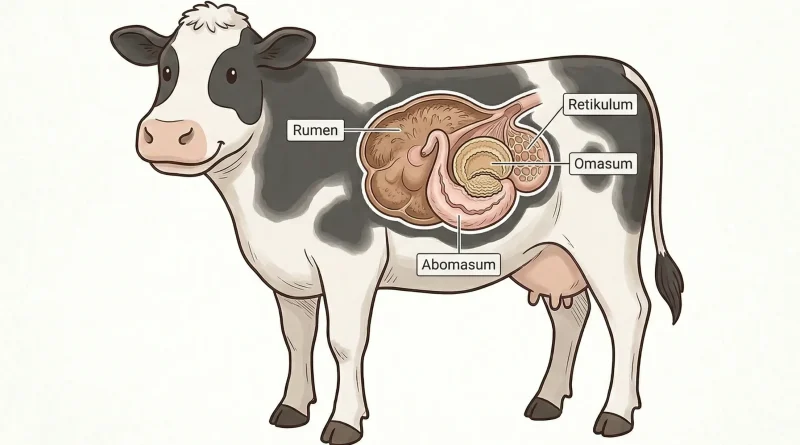
To be scientifically accurate, a cow actually has only one stomach. However, that single stomach is divided into four distinct compartments. This is why many people mistakenly believe they have four separate stomachs.
The four compartments are:
- Rumen
- Reticulum
- Omasum
- Abomasum
Understanding the answer of question requires looking at how these four sections work together as a highly specialized fermentation factory.
Why Do People Ask How Many Stomachs Does a Cow Have?
The confusion stems from the complex way cows digest food. Unlike humans, who have a monogastric (single-chambered) digestive system, cows are ruminants. Ruminants are mammals that are able to acquire nutrients from plant-based food by fermenting it in a specialized stomach prior to digestion.
When you investigate digestive system of cows, you are actually investigating a biological adaptation that allows cattle to eat fibrous plants like cellulose and hay—materials that humans simply cannot digest.
Breakdown of the Four Stomach Compartments
To fully grasp the complexity of stomachs of a cow, we must examine each compartment’s specific role in the digestive journey.
1. The Rumen: The Fermentation Vat
The rumen is the largest part of the system. In a mature cow, it can hold up to 25–50 gallons of material. This is where the magic happens. Billions of bacteria, fungi, and protozoa live here, breaking down complex carbohydrates.
2. The Reticulum: The Hardware Stomach
Connected closely to the rumen, the reticulum has a “honeycomb” lining. Its main job is to trap heavy or dense objects (like nails or wire) that a cow might accidentally swallow. This prevents “hardware disease” from damaging the heart or other organs.
3. The Omasum: The Manyplies
Often called the “leaves of the Bible” due to its many folds, the omasum acts as a filter. It absorbs water and nutrients from the food before it moves on to the final stage. When discussing stomachs of cow , the omasum is often cited as the most efficient water-recycling organ.
4. The Abomasum: The True Stomach
If you were to compare a cow’s anatomy to a human’s, the abomasum is the closest match. This is the “true stomach” where digestive enzymes and gastric juices (hydrochloric acid) break down the fermented microbes and bypass proteins.
The Process of Rumination: Chewing the Cud
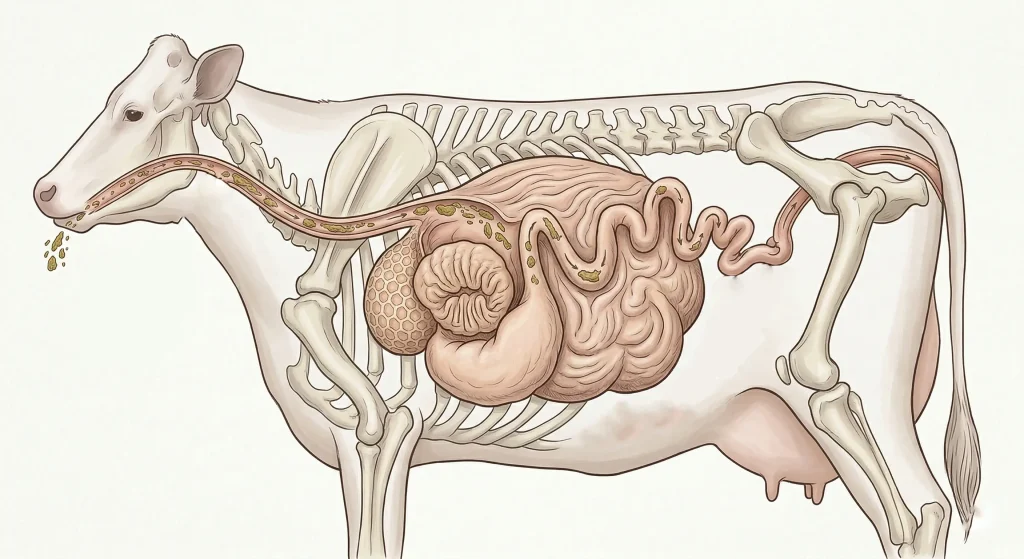
Asking the question is only half the story. The way they use these compartments is equally important. This process is called “rumination” or “chewing the cud.”
- Regurgitation: The cow brings partially digested food (cud) back up from the rumen.
- Re-chewing: They chew it again to break it down into smaller particles.
- Re-salivation: Saliva acts as a buffer for the rumen’s acidity.
- Re-swallowing: The finer particles move into the next compartments.
Comparative Anatomy: Do All Ruminants Have the Same Number of Stomachs?
If you are curious about how many stomachs does a cow have, you might also wonder about sheep, goats, or deer. The answer is yes—all ruminants share this four-compartment structure.
Fun Facts About Cow Stomachs
- A newborn calf has all four compartments, but only the abomasum is fully functional while they are nursing.
- Cows spend nearly 8 hours a day chewing their cud.
- The rumen produces a significant amount of methane gas during the fermentation process.
Why Understanding How Many Stomachs Does a Cow Have Matters for Farmers
For livestock owners, the health of these four compartments is vital. If the pH balance in the rumen is off, a cow can develop a condition called acidosis, which can be fatal. By understanding how they function, farmers can provide the correct balance of fiber and grain to keep their animals healthy.
For professional veterinary standards and agricultural data, the USDA Animal Health department provides excellent resources for managing ruminant health.
Conclusion
So, the next time someone asks you, you can confidently tell them they have one stomach with four incredibly specialized compartments. From the massive fermentation vat of the rumen to the acid-driven digestion of the abomasum, cows are a marvel of biological engineering.
Whether you are a student writing a report or a curious observer, knowing the details of bovine digestion helps us appreciate the vital role these animals play in our ecosystem and food supply.
Frequently Asked Questions
Is it true that a cow has 4 stomachs?
Technically, no. They have one large stomach divided into four compartments (Rumen, Reticulum, Omasum, and Abomasum).
What happens if a cow’s stomach stops working?
Since they rely on fermentation to live, a “stalled” stomach (bloat or acidosis) is a medical emergency that requires immediate veterinary intervention.
