

How Much Horsepower Does a Horse Have? 3 Amazing Secrets
How much horsepower does a horse have is a question that frequently gallops into my clinic conversations, usually sparked by a car enthusiast or a curious pet owner. As a veterinarian, I find this topic fascinating because it forces us to compare a rigid mechanical unit of measurement with the dynamic, living physiology of an equine athlete. While we use the term “horsepower” to describe everything from electric blenders to luxury sports cars, the biological reality of the animal behind the name is far more impressive than most people realize.
In this comprehensive guide, we will investigate the science of equine exertion and finally settle the debate on the true mechanical output of these magnificent creatures.
What is Horsepower?
To answer the central question, we first need to understand the history: what is horsepower? This unit of measurement was not actually designed by a biologist, but by the Scottish engineer James Watt in the 1780s. Watt was an innovator of steam engines and needed a relatable way to prove to mill owners and miners that his machines could replace their working animals.
By observing ponies pulling coal in a mine, Watt estimated that a typical pony could lift 22,000 foot-pounds of work per minute. He then increased this figure by 50% for a full-sized horse, establishing the standardized unit of 33,000 foot-pounds per minute. Essentially, 1 horsepower is the amount of power needed to lift 550 pounds one foot in one second. However, Watt’s measurement was based on a horse’s average output over a full four-hour shift—not its maximum capacity.
The Scientific Breakdown: How Much Horsepower Does a Horse Have?
If we look at a horse through the lens of sports medicine rather than 18th-century mining, the numbers change drastically. So, how much horsepower does a horse have when it is pushed to its limit?
Research conducted by biomechanists has shown that a healthy, adult horse can produce a peak output of approximately 14.9 horsepower. This massive spike occurs during high-intensity activities such as a Thoroughbred’s gallop or a Draft horse’s heavy pull. The “1 HP” we use as a standard is actually a measurement of aerobic capacity—the level of work a horse can sustain without getting exhausted. The 14.9 HP figure represents its anaerobic peak, a short-lived burst of immense power.
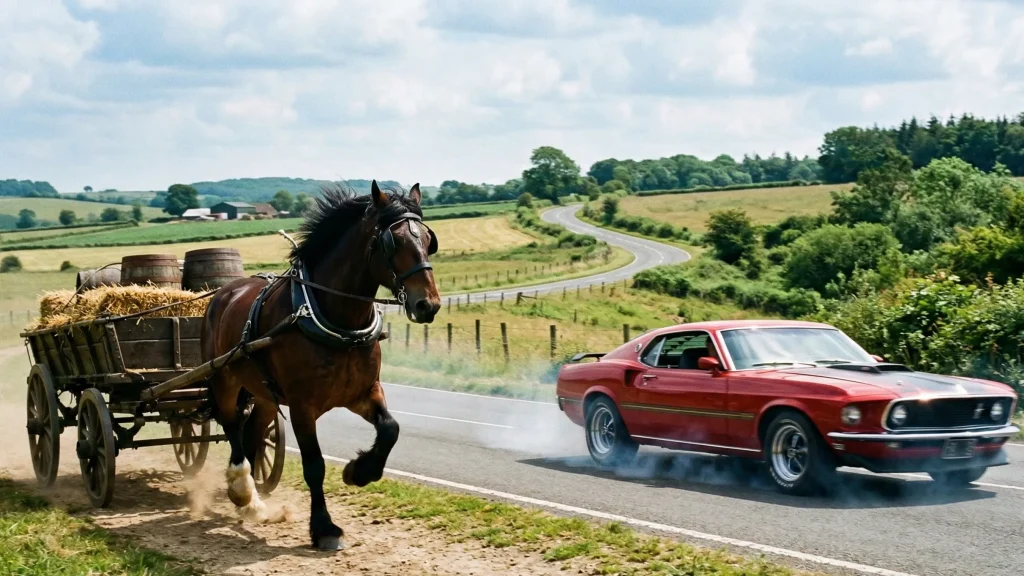
Why Anatomy Influences How Much Horsepower Does a Horse Have
From a clinical standpoint, the horse is a biological “turbocharger.” Several unique physiological traits allow them to exceed their standardized 1 HP rating so significantly:
1. The Splenic Contraction
Horses have an incredible evolutionary advantage called splenic contraction. Under high stress or intense exercise, the spleen contracts and injects millions of concentrated red blood cells into the bloodstream. This significantly increases the blood’s ability to carry oxygen to the muscles, effectively acting like a natural shot of nitrous oxide.
2. Muscle Fiber Specialization
Depending on the breed, horses have different ratios of “fast-twitch” and “slow-twitch” muscle fibers. This directly affects how much horsepower does a horse have in specific scenarios. A Quarter Horse is designed for a massive 15 HP burst over a short distance, whereas a Clydesdale is designed for high torque and lower, sustained power.
3. Skeletal Leverage
A horse’s skeleton is a system of highly efficient levers. The way their tendons store elastic energy allows them to move their heavy bodies with minimal energy waste, a concept we explore further in our internal article about Equine Joint Health and Longevity.
Frequently Asked Questions (FAQ)
Can a horse maintain 15 horsepower?
No. Just like a human sprinter cannot maintain a 100-meter dash pace for a marathon, a horse can only hit its peak horsepower for a few seconds to a minute before lactic acid begins to build up in the muscles.
What is horsepower compared to human strength?
An elite athlete can produce about 1.2 horsepower for a short duration, while a regular person averages about 0.1 HP for daily tasks. This shows just how superior the horse is as a natural engine.
Does a horse’s diet change its power output?
Absolutely. For a horse to reach its peak HP, it needs specific caloric intake. You can find more details on high-performance diets at the American Association of Equine Practitioners (AAEP), which provides excellent external resources on veterinary nutrition.
Conclusion
So, how much horsepower does a horse have? While the mechanical world tells us the answer is one, the veterinary world knows the truth: it is nearly fifteen. James Watt was a brilliant marketing mind who standardized a unit for the industrial age, but he significantly underestimated the biological potential of the horse.
As a vet, I see these animals as high-performance machines that require careful maintenance, the right fuel, and an understanding of their physical limits. Whether they are walking at 1 HP or sprinting at 15 HP, they remain one of the most powerful and efficient athletes on the planet.
To follow our instagram page click. And to see our all articles about animals click.
